Subsurface drip irrigation (SDI) system

  1. /
  2. Irrigation equipment
  3. /
  4. Subsurface drip irrigation (SDI)...

Drip irrigation system

Drip irrigation is a targeted, water-saving method that delivers water directly to the root zone of plants.

In the case of a subsurface drip irrigation (SDI) system, the irrigation pipes are installed in the soil, minimizing evaporation, improving water-use efficiency, reducing weed growth, and supporting better root development.

The surface solution irrigates from the soil surface through drip tapes or pipes, is easier to install, and can be precisely controlled. It is particularly effective in vegetable and fruit production.


Minimal water loss

Targeted water application reduces evaporation and runoff, making the system a highly water-efficient solution.

Precise dosing

Water is delivered directly to the root zone, supporting healthy crop development and reducing weed growth.

Subsurface drip irrigation (SDI) system

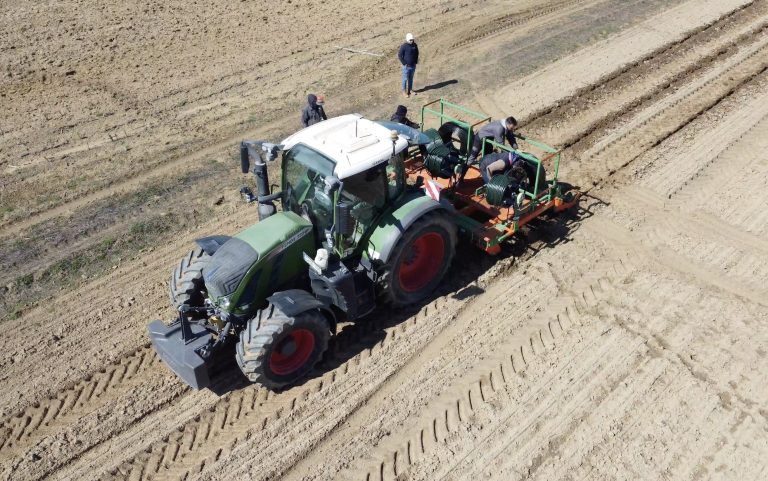
Subsurface drip irrigation technology delivers water directly into the soil, close to the roots of the plants. During the process, irrigation pipes are installed below the soil surface, and the water flows slowly and evenly into the root zone in the form of droplets, thereby reducing evaporation and ensuring optimal water supply for the crops.

Water is conveyed through a pressure pipeline network to pressure-compensated drip lines equipped with root intrusion protection. The installation depth ranges from 10 to 70 cm, depending on the rooting depth of the crop and the mechanical composition of the soil. The spacing between drip emitters is generally 0.20–1.5 m in arable fields, and 0.25–5 m in orchards, depending on plant spacing.

Efficient water management

Since water is distributed directly at the root zone, evaporation is avoided and water loss is minimized.

Reduces weed growth

Since the water does not reach the soil surface, weeds are less able to develop, thereby reducing their spread.

For a root depth of 40 cm and a soil cultivation depth of 20 cm.

The system is suitable for irrigating any crop whose root system reaches a depth of 40 cm, and where surface soil cultivation does not exceed 20 cm.

It can be particularly useful in areas where water-use efficiency is a key priority, or where other irrigation methods cannot be applied due to terrain obstacles.

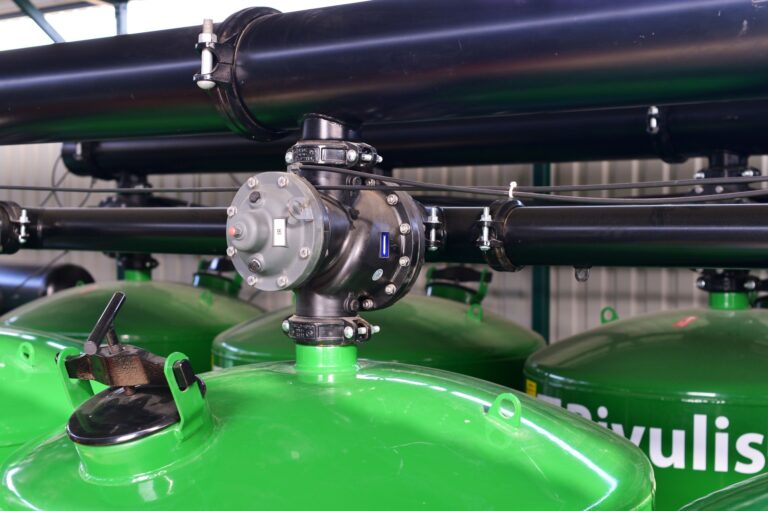
Due to the nature of this irrigation method, the greatest risk is emitter clogging; therefore, strong emphasis must be placed on filtration and flushing.

Advantages of subsurface drip irrigation (SDI)

  • Precise dosing, water and energy efficiency: Since water is distributed directly at the root zone, evaporation is avoided and water loss is minimized.
  • Applicable on areas of almost any size, shape, or topography.
  • Can also be used on soils with poor water management properties.
  • Efficient nutrient uptake: Delivering nutrients and water directly to the root zone promotes improved nutrient absorption by plants.
  • Reduces weed growth: Since water does not reach the soil surface, weeds are less able to develop.
  • Deeper root development: Water also becomes available in deeper soil layers, supporting deeper root growth and improving drought resistance.

Related services

Agricultural irrigation planning

Agricultural irrigation planning and implementation, from initial design to turnkey delivery, with comprehensive project management covering legal, technical, and funding aspects.

Tovább

Irrigation system installation

Installation of modern irrigation systems for all types of agricultural areas. Comprehensive implementation of precise, water-efficient, and automatable solutions, from water extraction to application, with

Tovább