Micro-irrigation system
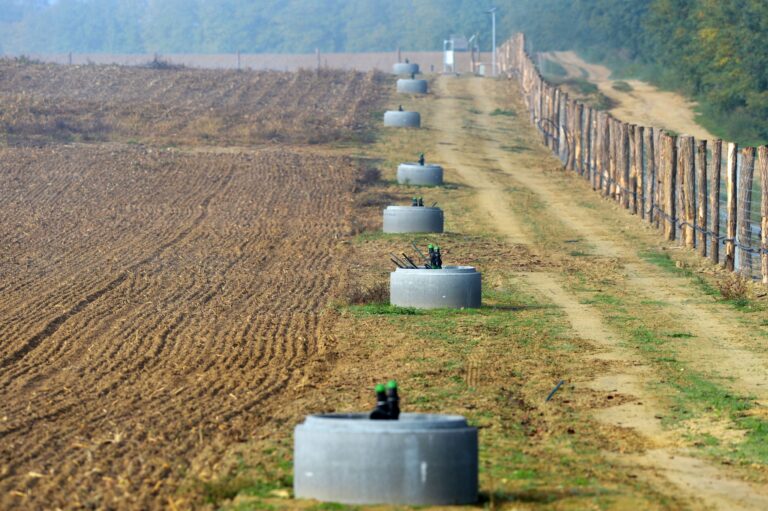
Micro-irrigation applies small amounts of water at low pressure directly to the plants; frequent dosing, high water and energy efficiency.

Micro-irrigation applies small amounts of water at low pressure directly to the plants; frequent dosing, high water and energy efficiency.

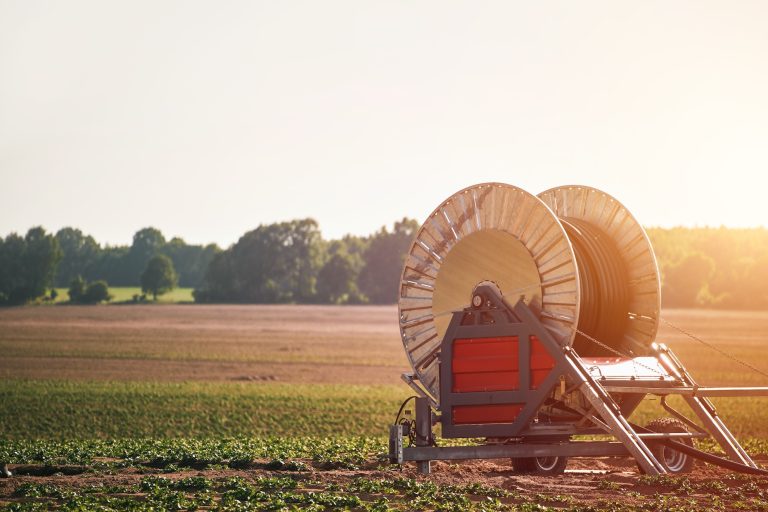
Long-range hose reel irrigation systems. Easy to move, tractor-transportable, ensuring efficient irrigation.

Subsurface drip irrigation: water is delivered directly to the root zone, reducing evaporation, while deeply installed pipelines provide uniform water supply.
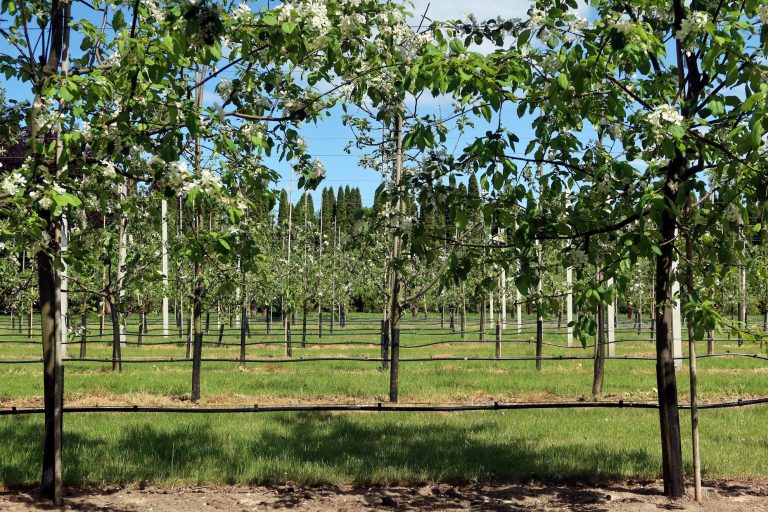
Surface drip irrigation: water is delivered to the root zone from pipes laid on the soil surface, with uniform and controlled application.
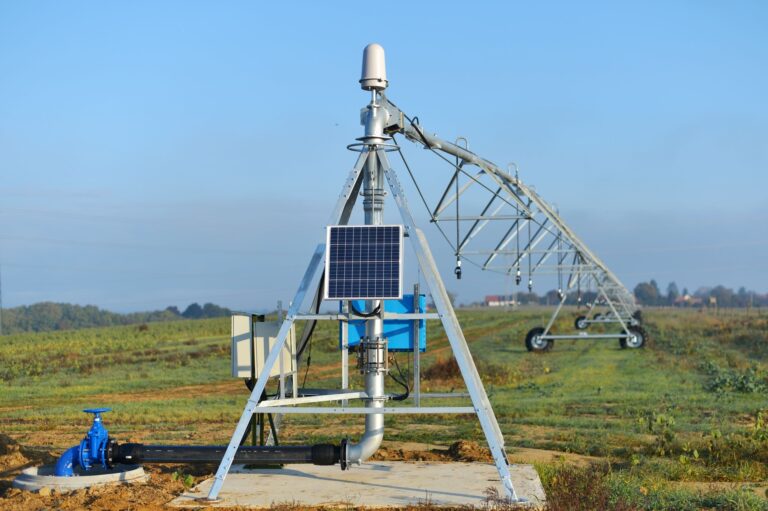
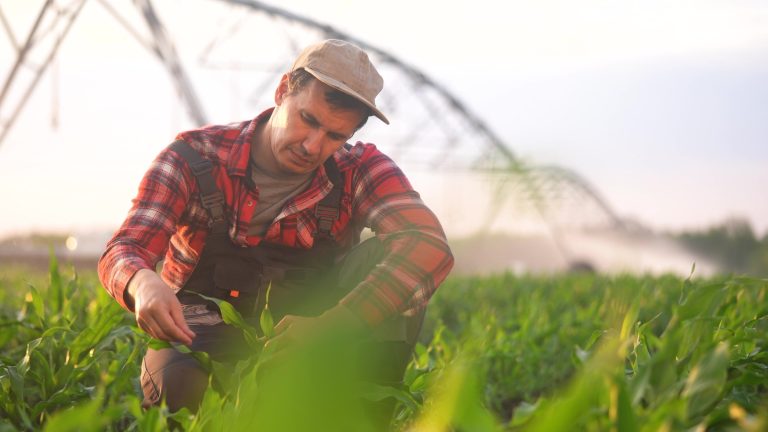
Self-propelled center pivot irrigation systems for large areas. Long lateral pipelines, towers, and 360° operation; capable of irrigating up to 400 ha.
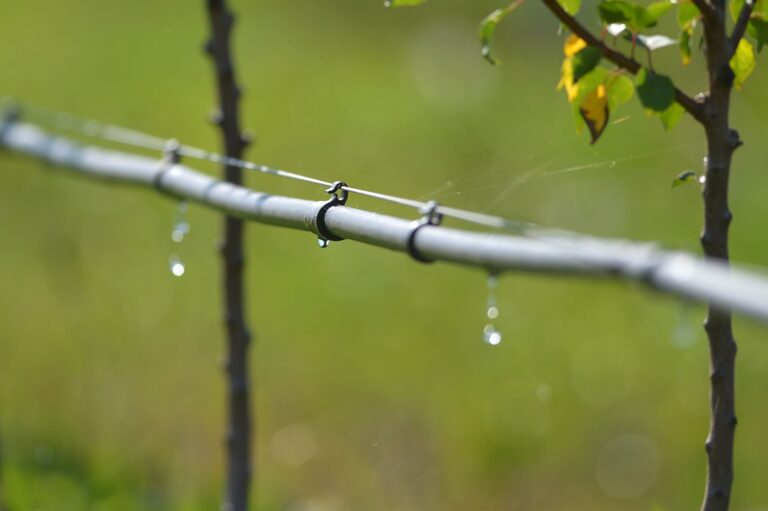
Water is distributed uniformly across the irrigated area, ensuring adequate water supply for optimal crop development.
Sprinkler irrigation systems are often automated and equipped with timers or sensors, allowing easy operation and precise control.
Its disadvantages include high evaporation losses when the system operates at high temperatures or in direct sunlight. Therefore, its use with well water, i.e. groundwater abstraction from soil water or confined aquifer water, is only possible if the irrigation system is designed in a special way that also complies with the technical requirements of micro-irrigation.
A hose-reel irrigation system basically consists of a water-filled hose that is wound onto a motor-driven reel drum. It is available in both rain-gun and irrigation-boom versions.
Hose-reel irrigation machines can provide excellent irrigation over distances of 100–600 m, so the covered area may range from 3 to 50 ha per reel. The irrigation reels are easy to move, as they can be transported to the irrigation area by tractor.
Hose-reel irrigation machines provide excellent irrigation over distances of 100–600 m, with a covered area of 3–50 ha per reel.
Its operation requires manual labour; its main advantage over self-propelled systems is the lower capital investment cost.
After the irrigation support legs are set down and secured in the field, the irrigation hose is laid out by pulling out the rain-gun carrier trolley. During irrigation, the polyethylene hose is reeled back onto the drum by a turbine using the energy of the water, pulling in the operating rain gun or irrigation boom.
The water application rate can therefore be controlled by adjusting the retraction speed. The direction of the sprinkler heads on hose-reel machines is adjustable, and the system can be fitted with a timer that automatically controls the irrigation time. Its operation requires manual labour; its main advantage over self-propelled equipment may primarily be its lower capital investment cost.
Self-propelled center-pivot irrigation systems are manufactured with lateral pipelines of various lengths, typically 80–700 m, supported by drive towers rolling on carrier wheels or crawler tracks. Center-pivot irrigation systems rotate continuously around a central tower, enabling irrigation of areas of up to 400 ha.
The irrigation nozzles are mounted along the lateral pipeline or suspended from smaller drop pipes. Due to the rotating movement, irrigation can be carried out over a 360-degree circle, while supplementary components, such as a corner irrigation element, can increase the irrigated area. Water supply for center-pivot irrigation systems is predominantly provided from a fixed hydrant installed at the central tower.
Center-pivot irrigation systems are manufactured with 80–700 m lateral pipelines and can irrigate areas of 50–400 ha.
Their operation does not require manual labour; due to their automation capability, they are particularly advantageous on large agricultural fields.
Center-pivot sprinklers are capable of distributing the water jet over different distances, making them suitable for irrigating various areas. In center-pivot irrigation systems, the spray angle of the water jet can be adjusted, allowing the area to be irrigated to be precisely delineated. The nozzles are generally adjustable, so the water application rate can also be regulated, enabling irrigation to be carried out according to crop water demand.
GPS-controlled center-pivot irrigation systems enable precision irrigation by fine-tuning machine speed, field zones and sprinkler heads based on soil water availability, the water requirements of the irrigated crops and weather data. The operation of center-pivot systems does not require manual labour, and their use is particularly advantageous on large agricultural fields due to their full automation capability.
A linear irrigation system, similar to a center-pivot system, consists of a lateral pipeline mounted on a movable support structure, which travels in a straight line and therefore provides full coverage on square or rectangular fields.
The system uses a water-conveying pipe fixed to a movable steel structure, with sprinklers arranged evenly along it to distribute water over the irrigated area. Its configuration may be a single-lateral system with water supply from one side, or a two-lateral system with central water supply.
The lateral pipelines are 100–800 m long and may have either side-feed or central-feed water supply.
Linear irrigation systems are often automated, enabling precise scheduling and control of irrigation, and are also suitable for precision irrigation.
The most common structural length of the lateral pipelines is between 100 and 800 m. Water supply may be provided from underground pressure pipelines, from hydrants using a trailed, reelable flexible hose, or from an open channel through a suction pipe and suction strainer.
Linear irrigation systems are often automated, enabling precise irrigation scheduling and control. Similarly to center-pivot systems, they are suitable for precision irrigation through the control of travel speed, irrigation zones and sprinkler heads.
Drip irrigation is a targeted, water-saving method that delivers water directly to the root zone of the plants.
In a subsurface drip irrigation system (SDI), the irrigation pipes are installed in the soil, minimizing evaporation, improving water-use efficiency, reducing weed growth and enhancing root development.
The surface solution irrigates from the soil surface through drip tapes or pipes; it is easier to install and can be well regulated. It is particularly effective in vegetable and fruit production.
Targeted water application reduces evaporation and runoff, making the system a particularly water-efficient solution.
Water is delivered directly to the root zone, supporting healthy crop development and reducing weed growth.
Subsurface drip irrigation technology delivers water directly into the soil, close to the plant roots. During the process, the irrigation pipes are installed below the soil surface, and the water flows slowly and uniformly into the root zone by dripping, thereby reducing evaporation and ensuring optimal water supply for the plants.
Water is conveyed through a pressure pipeline network to pressure-compensating drip lines equipped with root-intrusion protection. The installation depth is between 10 and 70 cm, depending on the rooting depth of the crop and the mechanical composition of the soil. The spacing of the drip emitters is generally 0.20–1.5 m in arable fields, and 0.25–5 m in orchards, depending on plant spacing.
Because water is distributed directly at the roots, evaporation is avoided and water loss can be minimized.
Because the water does not reach the soil surface, weeds are less able to develop, thereby reducing their spread.
The system is suitable for irrigating any crop whose root system reaches a depth of 40 cm, and where surface tillage does not exceed 20 cm.
It can be particularly useful in areas where water-use efficiency is of key importance, or where other irrigation methods cannot be applied due to terrain obstacles.
Due to the nature of this irrigation method, the greatest risk is clogging of the components; therefore, strong emphasis must be placed on filtration and system flushing.
Surface drip irrigation is well suited for different soil types and various crops.
Surface drip irrigation is particularly efficient in vegetable and fruit production, as well as in field crops.
Micro-irrigation is a collective term; the common feature of the irrigation solutions in this category is that the water application elements deliver small quantities of irrigation water, less than 500 l/h, at low pressure, below 2.5 bar, close to the plants to be irrigated.
All micro-irrigation methods allow small amounts of water to be applied several times a day and are characterized by outstanding energy and water efficiency. They can also be widely applied where the water supply is provided from groundwater sources.
Micro-irrigation is mainly implemented through surface or subsurface drip irrigation methods; however, there are also sprinkler heads used in sprinkler irrigation that meet the technical requirements of micro-irrigation.
Micro-irrigation is an efficient solution, as it delivers water directly to the root zone of the plants, reducing evaporation and runoff losses.
The system enables precise water application adjusted to the current growth stage of the crops.

Administration of the establishment of a sustainable water management community (formerly irrigation community), in accordance with grant requirements and based on secure legal and professional
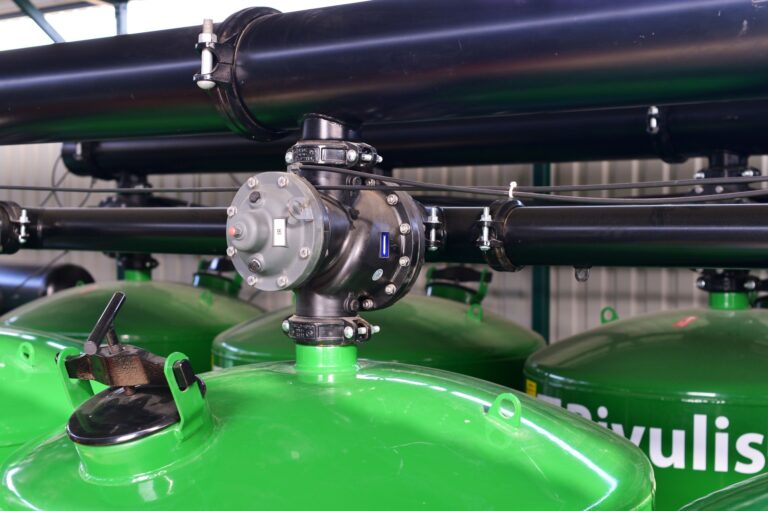
Agricultural irrigation planning and implementation, from initial design to turnkey delivery, with comprehensive project management covering legal, technical, and funding aspects.
Full administrative support for seamless project implementation and grant submission, including obtaining the required water rights and environmental permits.
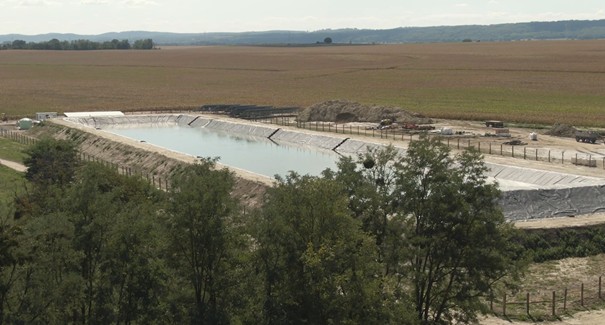
Technical and administrative support required for the successful submission of grant applications.
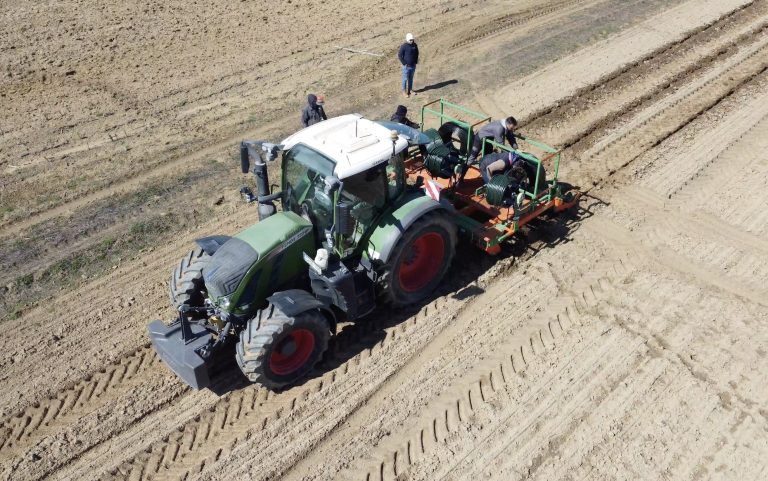
Installation of modern irrigation systems for all types of agricultural areas. Comprehensive implementation of precise, water-efficient, and automatable solutions, from water extraction to application, with